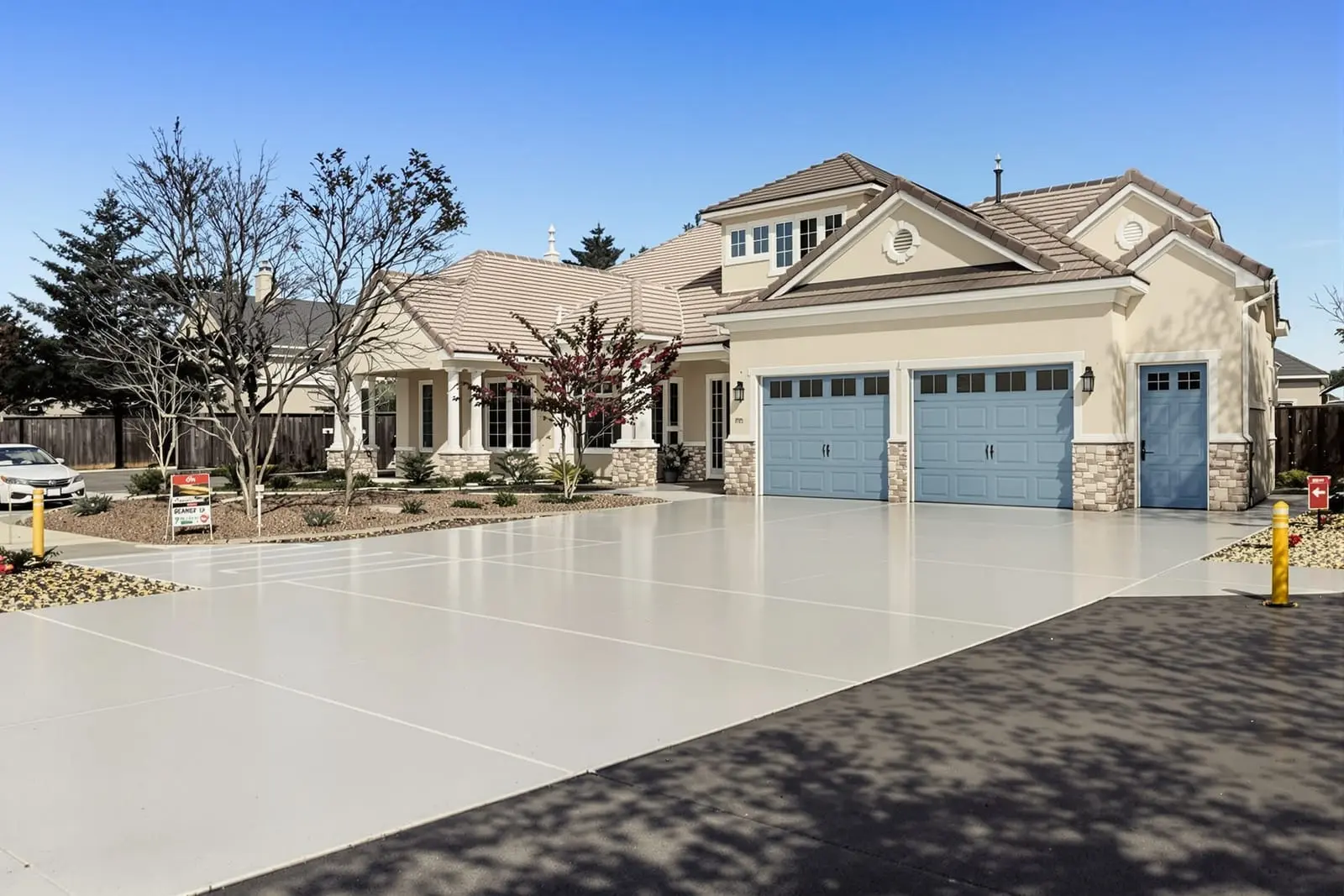
Support your business with reliable commercial concrete paving in Franklin, TN. We install heavy duty pavements for parking areas, drive lanes, and commercial sites. Proper subgrade prep and reinforcement help concrete handle traffic and load demands. Keep your property accessible and professional with long lasting concrete surfaces.
Primetime Concrete Franklin provides professional commercial concrete paving throughout Franklin, TN and the surrounding area. Our licensed, insured crew delivers safe, clean, on-time work with a free estimate before anything begins. Call (615) 716-0343 or request your free quote.
Commercial Concrete Paving for Franklin Businesses
Primetime Concrete Franklin installs and repairs commercial concrete paving that is built for heavy traffic, Tennessee heat, and long-term use. We focus on practical design, honest advice, and concrete work that holds up in real conditions, not just on paper.
Commercial concrete paving is a good fit for loading docks, dumpster pads, drive lanes, parking lots, walkways, and equipment areas where asphalt breaks down or ruts under weight. In Middle Tennessee, the summer heat, sudden storms, and winter freeze-thaw cycles are hard on pavement. We plan each project around those realities so your concrete does not spall, crack, or settle before its time.
When you call Primetime Concrete Franklin, we start by walking the property with you. We look at traffic patterns, truck weights, drainage paths, and how the site is used during business hours. A restaurant drive thru has very different demands than a warehouse dock or medical office parking lot, so we do not use one standard pavement section for every job. We recommend thickness, reinforcement, and mix design based on your actual use so you are not overpaying, but you are also not stuck with concrete that is too light for the job.
How Our Commercial Concrete Paving Process Works
For commercial concrete paving in Franklin, the quality of the base and drainage is just as important as the concrete mix. Our crews start by saw cutting and removing any failed asphalt or concrete, then hauling it off site for proper disposal or recycling. We strip out soft soils and organic material and proof-roll the subgrade to find any weak spots. If the ground pumps or deflects under a loaded truck, we fix that before we pour anything.
Next we install and compact a graded aggregate base, usually crushed stone, to a thickness appropriate for your traffic loads. We use plate compactors in tight spaces and rollers for larger lots and drives, checking density and slope as we go. Proper slope, usually between 1 and 2 percent, keeps water moving toward drains or edges instead of pooling on the slab. Standing water is one of the main reasons commercial concrete fails early in Middle Tennessee.
We then set forms or slip-form edges depending on the layout. Reinforcement is placed according to the design, which might be rebar on chairs, welded wire mesh, or fiber reinforcement in the concrete mix. For heavy truck routes, dumpster pads, and industrial yards, we typically recommend 6 inch or thicker concrete with rebar, higher strength mix, and tighter joint spacing.
Once forms and reinforcement are in place, we pour using ready mix designed for commercial use. During the pour we keep the concrete at a consistent slump so it is workable without being too wet, which can weaken the surface. Our finishers strike off, bull float, edge, and then apply a broom finish for slip resistance. In high traffic areas like ramps and drive thrus, we may use a slightly heavier broom texture so tires grip better in rain.
Control joints are saw cut or tooled in a grid pattern to manage where cracking occurs as the concrete shrinks. For most commercial slabs in Franklin, joints are spaced about 10 to 12 feet apart, adjusted for slab thickness and layout. We also seal joints and edges in key areas to keep water and de-icing salts out of the base.
Material Choices, Thickness, and Finish Options
Not every commercial concrete paving job needs the same spec. Primetime Concrete Franklin helps you choose the right combination of thickness, reinforcement, and finish instead of pushing one standard option.
For light duty vehicle parking lots and general car traffic, 4 to 5 inches of concrete with fiber reinforcement or light mesh can work well if the base is built correctly. For drive aisles that receive regular box truck or delivery van traffic, we may increase to 5 or 6 inches and upgrade the mix strength. For heavy truck routes, bus traffic, or dumpster pads that see point loads from outriggers, we typically recommend 6 to 8 inches with rebar and higher PSI concrete.
Finish options are chosen around slip resistance, maintenance, and appearance. A standard broom finish is the most common for commercial concrete paving, since it is durable and gives good traction in rain. In front entry walks and courtyard areas, we can use a tighter broom or a light exposed aggregate finish that offers a more refined look while still holding up under foot traffic.
We also offer integral color and stains for areas where appearance matters, such as retail storefronts or office complexes. In Franklin, where sunlight can be strong in summer, some property owners choose lighter colored concrete to reduce heat buildup compared to dark asphalt. For loading docks and warehouse aprons, function usually comes first, so we stick to standard gray with emphasis on surface strength and joint layout rather than color.
To extend the life of your commercial concrete paving, we often recommend a penetrating sealer after the concrete has cured. This helps reduce surface moisture absorption and staining from oil, grease, and de-icing products. In areas that see frequent forklift or pallet jack traffic, we can discuss surface hardeners and mix additives that resist abrasion and tire marking.
Local Conditions, Scheduling, and Common Problems We Solve
Franklin and the greater Williamson County area see hot, humid summers, occasional ice and snow in winter, and strong rain events in spring and fall. Primetime Concrete Franklin schedules pours and designs commercial concrete paving around these conditions.
In summer, we often pour early in the day to avoid rapid surface drying and shrinkage cracking. We use proper curing methods, such as curing compound or wet curing, so the slab gains strength evenly. In cooler months, we pay attention to forecast lows and use blankets or adjusted mix designs when needed so the concrete is not damaged by an overnight freeze. We will not recommend a pour date that puts your investment at risk just to rush a schedule.
Common problems we see on existing commercial concrete in Franklin include random cracking, settled panels at drain inlets, raveling or flaking surfaces, and ponding water. Many of these issues come from thin sections, poor base prep, or no consideration for drainage during the original build. When we replace or extend an existing paved area, we look at how water is moving today and how traffic is using the space, then redesign joints, slopes, and base to avoid repeating those failures.
If you are working under a tight business schedule, we can often phase the work so part of your lot or drive stays open. We coordinate with your management team on access routes for customers, employees, and deliveries. For retail and restaurant clients, this might mean working overnight or on off days for entrances and drive lanes. For industrial sites, we often plan around shift changes and shipping schedules so downtime is limited.
We also help property managers in Franklin who are budgeting ahead. If your existing asphalt lot is failing, it may be more cost effective to convert the heaviest traffic lanes and loading areas to commercial concrete paving and keep lighter duty areas as asphalt. We can provide options and phased plans instead of a single all or nothing proposal.
What Drives Cost and How to Hire the Right Paving Contractor
Commercial concrete paving cost in Franklin depends on more than just square footage. Thickness of the slab, type and amount of reinforcement, site access for trucks, amount of demo and haul off, base material depth, and drainage corrections all affect price. Heavy duty truck areas, tight sites that require more hand work, or locations with poor existing soil will cost more than straightforward parking stalls on stable ground.
When you talk to Primetime Concrete Franklin, we explain what is built into your estimate so you know where your money is going. For example, if we recommend thicker concrete or added base under dumpster pads and loading areas, we will show you the loads those areas see and what happens when that detail is skipped. A lower price that ignores those stress points almost always turns into future repair bills.
Before you hire any commercial concrete paving contractor, ask about their experience with similar properties in Middle Tennessee. Ask how they handle drainage design, joint layout, base compaction, and curing. Request references for work that has been in service for several years, not just brand new slabs. Quality concrete paving looks good on day one, but the real test is how it behaves through several Franklin summers and winters.
Make sure your contractor carries insurance and pulls any required permits or coordinates with your civil engineer when plans are involved. For larger projects, we are comfortable working from engineered drawings and communicating with your architect, property manager, or general contractor.
If you are in Franklin or nearby and want straightforward guidance on commercial concrete paving, Primetime Concrete Franklin can walk the site, discuss options at different price points, and put together a clear scope of work. Our goal is to give you pavement that matches how your property is used, stays in service longer, and reduces your long term maintenance headaches.
“
Professional commercial concrete paving, done right the first time, quality materials, honest pricing, and results that last.
Primetime Concrete Franklin
Commercial Concrete Paving Across Our Service Area