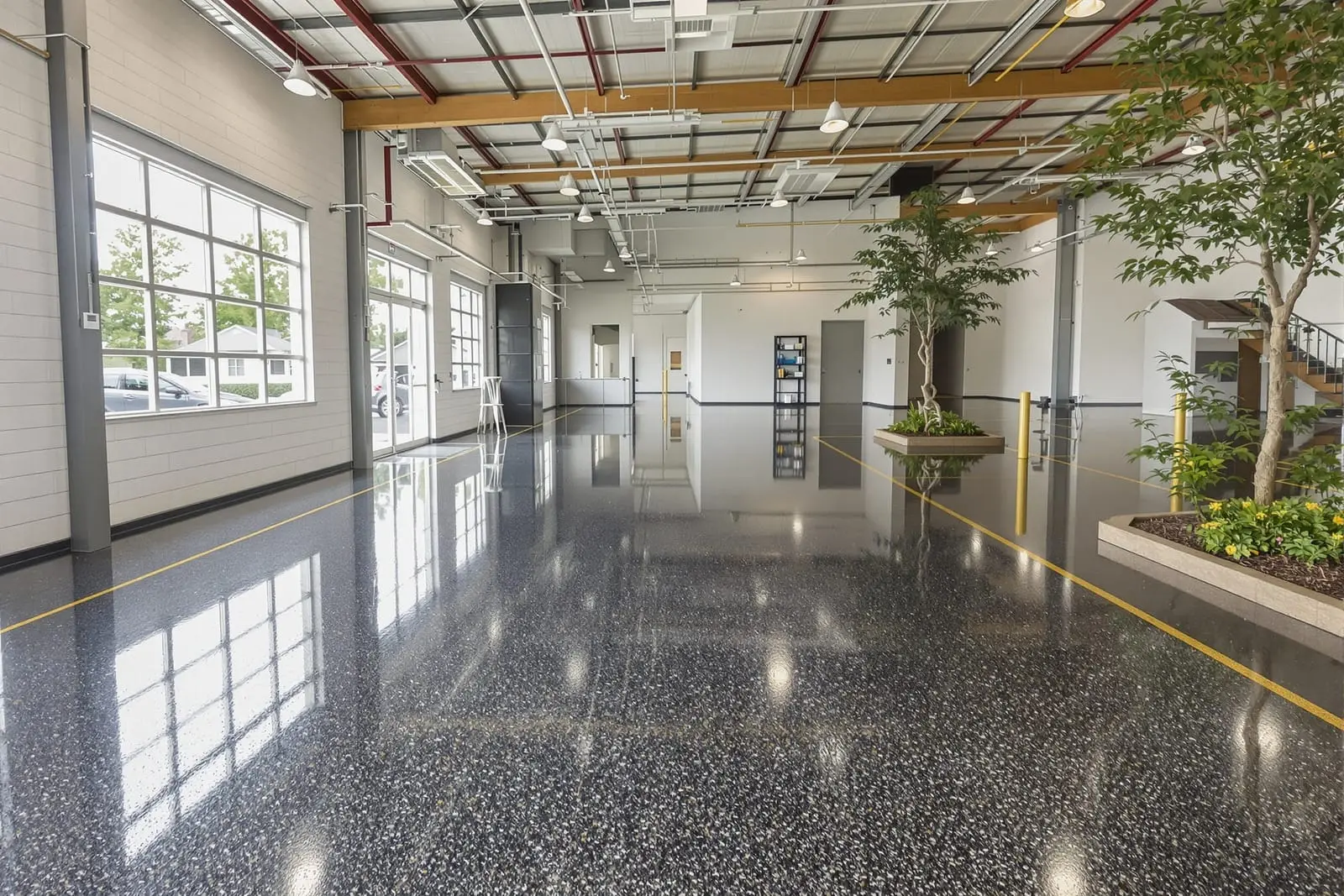
Support heavy traffic and loads with industrial concrete floors in Franklin, TN. We pour thick, reinforced slabs for warehouses, plants, and shops. Proper joint layout, flatness, and surface hardening help floors handle forklifts and storage racks. Get a durable floor tailored to your facility needs.
Primetime Concrete Franklin provides professional industrial concrete floors throughout Franklin, TN and the surrounding area. Our licensed, insured crew delivers safe, clean, on-time work with a free estimate before anything begins. Call (615) 716-0343 or request your free quote.
Durable industrial concrete floors for Franklin warehouses and plants
Industrial concrete floors have to handle a lot more than everyday foot traffic. In warehouses and production facilities around Franklin, TN, your slab is carrying loaded forklifts, pallet jacks, steel racks, and sometimes chemical exposure. Primetime Concrete Franklin focuses on floors built for that level of punishment, with mixes, reinforcement, and finishes chosen for your exact use instead of a one-size-fits-all approach.
When we visit your site, we start by asking how the space is used now and how you expect it to change in the next 5 to 10 years. Are you running narrow-aisle forklifts, storing tall pallet racks, or installing fixed machinery like presses or CNC equipment? That usage determines slab thickness, reinforcement layout, and control joint spacing. A light assembly shop might be fine with a 5 inch slab, while a heavy warehouse with frequent forklift traffic and high point loads may need 6 inches or more with heavier reinforcement. By sizing the floor to your actual loads upfront, we greatly reduce cracking, slab curl, and costly repairs later.
Franklin’s climate also matters. Our freeze-thaw cycles, periods of heavy rain, and summer humidity all affect how concrete behaves. Primetime Concrete Franklin uses air-entrained mix designs and proper curing methods suited to Middle Tennessee, and we schedule pours to avoid the worst temperature swings when possible. All of this is done so your floor does not just look good on day one, but stays flat, safe, and serviceable over the long term.
How we build warehouse and industrial concrete floors that last
A long-lasting industrial floor starts with the soil and base under the slab. We begin with subgrade evaluation, checking for soft spots, organics, and moisture issues. In Franklin, many sites have a mix of clay and rock, so we compact the subgrade to the proper density and typically install 4 to 6 inches of crushed stone base. This base provides uniform support and helps manage moisture and minor ground movement.
Next, we set up forms, layout, and reinforcement. Depending on your engineering requirements, we may use welded wire fabric, rebar, dowel baskets at construction joints, or a combination. For warehouses with high rack loads or frequent forklift traffic, we often recommend doweled joints to reduce vertical movement at slab edges. We carefully plan control joint locations before we pour, so they line up with racking aisles, column lines, and doorways instead of creating random trip hazards.
Concrete placement is done with a ready-mix specifically designed for industrial floors, typically a higher strength mix with a lower water-cement ratio for better durability. We use laser screeds or vibratory screeds to achieve accurate elevation and slab flatness, a key factor if you are running high-reach forklifts or sensitive equipment. After screeding, we bull float, let the bleed water evaporate, then power trowel to the finish level you select. Finally, we cut joints as soon as the concrete can support saws, to control where the slab will crack as it cures.
Finish options for industrial floors in active facilities
Not every industrial floor needs the same finish. Primetime Concrete Franklin will help you choose the right surface for your use, maintenance expectations, and budget.
For most warehouses, a hard-troweled finish with a penetrating curing compound is the starting point. It is smooth enough for forklift travel, easier to sweep, and has good abrasion resistance. For facilities that expect constant pallet drag or metal-wheeled carts, we often recommend a dry shake hardener broadcast into the surface during finishing. This adds a wear-resistant layer that significantly extends floor life in the most heavily trafficked lanes and turning areas.
If you need better light reflection or a more dust-resistant surface, we can mechanically polish the concrete after it has cured. Polished industrial concrete floors are popular in distribution centers and manufacturing where visibility and cleanliness matter. Polishing densifies the surface and can reduce tire marks, which cuts down on cleaning time. For areas with chemical exposure, like maintenance bays or manufacturing lines, we can apply industrial-grade sealers or coatings that resist oils, coolants, and mild chemicals while still bonding well to the slab, as long as we plan that requirement before the pour and finishing stage.
Local conditions that affect timing, cost, and performance
Franklin’s weather can have a big impact on how and when industrial concrete floors are installed. Hot, humid summers speed up the set time, so we often schedule large pours early in the morning, use set-controlling admixtures, and carefully manage curing to prevent surface cracking. In cooler months, we watch for overnight lows that can slow strength gain or trap moisture. Primetime Concrete Franklin builds these realities into the project plan so you do not lose days of productivity unnecessarily.
Moisture is another Franklin-specific concern. We see a lot of slabs placed over damp subgrades or in areas with poor drainage. If you plan to use adhesives, epoxy coatings, or sensitive finishes on top of your slab, we may recommend a vapor barrier below the concrete and confirm moisture conditions before final floor coverings are installed. This small upfront step can prevent blistered coatings or failed adhesives that are expensive to repair once operations start.
Cost is driven by several main factors: slab thickness and reinforcement, mix design, finish level, and project logistics. A basic warehouse floor for light forklift use costs less than a high flatness, heavy-duty slab designed for tall narrow-aisle racking. Access, required pour size per day, and working around active operations can also affect labor and equipment needs. We provide clear, line-item estimates so you know exactly what you are paying for and where you might choose to upgrade or save.
Common floor problems in warehouses and how we prevent them
Almost every facility manager has seen slab problems: forklift joints that rattle operators, cracks that collect debris, or low spots that trap water. Primetime Concrete Franklin designs and installs floors to avoid those issues from the start, and we can also address problems in existing facilities.
Random cracking is often the result of poor joint layout, inadequate reinforcement, or rushed curing. We combat this with proper joint spacing, timely saw cutting, and correct curing methods. In areas where heavy wheel loads cross joints all day, we use load-transfer devices like dowels and sometimes recommend joint filling materials to support edges and reduce spalling.
Slab curling, where the edges lift slightly, can create bumps at joints and rack lines. This is usually caused by moisture differences between the top and bottom of the slab or overly thin panels. By controlling mix water, using appropriate panel sizes, and applying curing compounds evenly, we significantly reduce curling risk. For cold storage or loading docks where temperature differences are high, we pay special attention to joint detailing to prevent long-term movement and damage.
If you already have an existing industrial concrete floor with problems, we can assess whether targeted repairs, joint rebuilding, or surface treatments will extend its life without a full replacement. Our goal is always to give you a clear, practical path that fits your downtime and budget constraints.
What to know before you schedule your industrial floor project
Most warehouse and industrial concrete floor projects in Franklin start weeks before the first truck arrives. We encourage you to involve Primetime Concrete Franklin early in your planning so we can coordinate with your racking supplier, electricians, plumbers, and equipment installers. Floor flatness, joint layout, and slab thickness can all affect where anchors, drains, and conduits should go.
If your facility is already operating, we help phase the work to limit disruptions. That may mean dividing the project into sections, setting up temporary access paths, and planning pour days outside of your heaviest shipping or production windows. We also review safety requirements with your team so our crews work efficiently within your existing protocols.
Before we begin, we will walk you through the construction sequence, expected cure times, when light and heavy traffic can resume, and any special protection the slab needs during the first weeks. Some industrial concrete floors can handle foot traffic within a day, but heavy forklifts or racking installation might need a longer window so the concrete reaches its designed strength. With a clear schedule and realistic expectations, you can plan staffing, inventory, and move-in dates with confidence and avoid surprises.
“
Professional warehouse & industrial concrete floors, done right the first time, quality materials, honest pricing, and results that last.
Primetime Concrete Franklin
Warehouse & Industrial Concrete Floors Across Our Service Area